

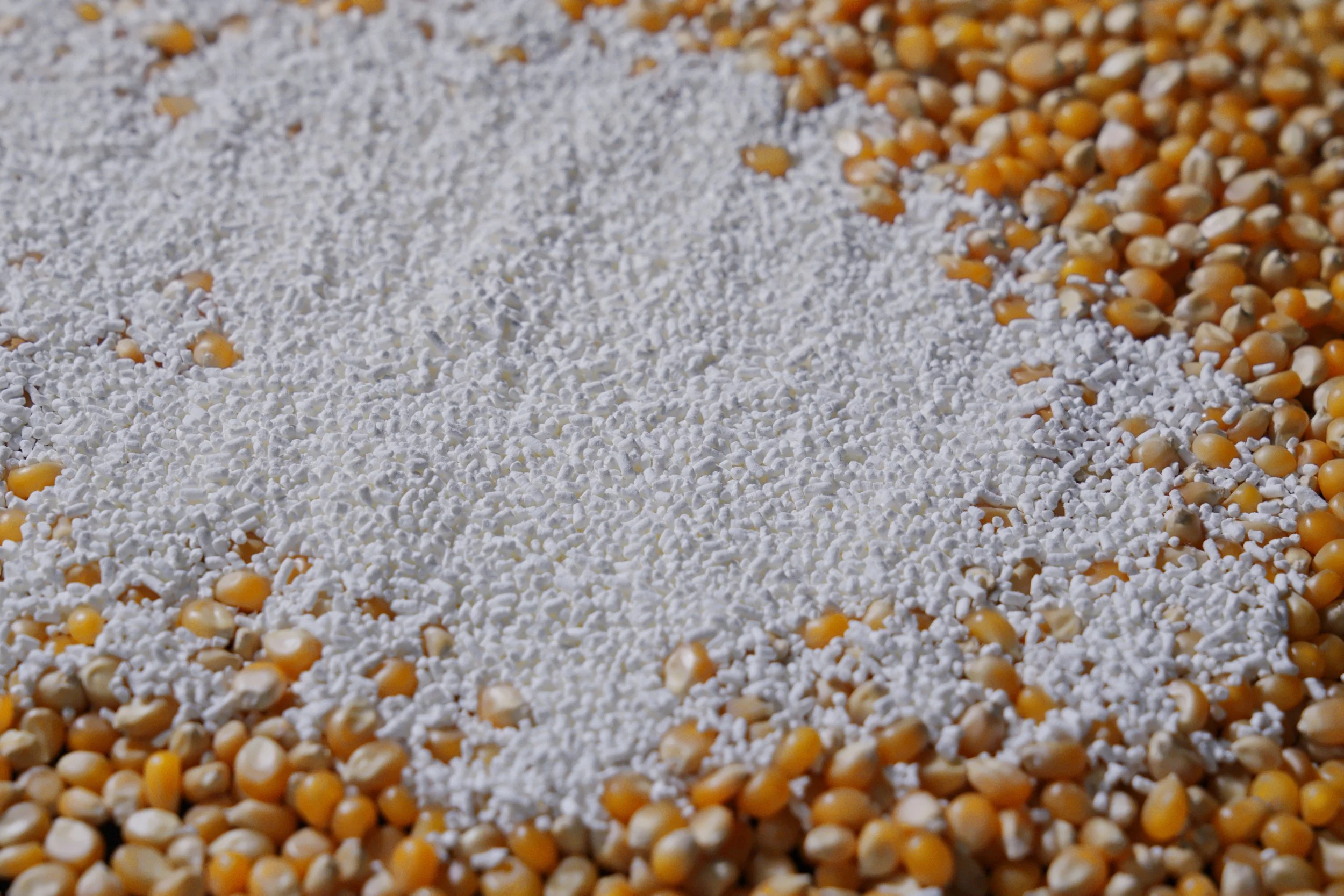
THE MATERIAL
CornNext‑17
A patented natural material platform developed from only corn starch, water and enzymes. Eight years of R&D have focused on making starch-derived materials practical for industrial forming and selected short-life applications.
MADE OF
Corn starch, water & enzymes
FIVE REASONS
Why is CornNext‑17 different from conventional material systems?
Designed with end of life in mind
Selected Corn Next products have shown rapid physical breakdown under defined soil and fresh-water test conditions. Environmental degradation depends on temperature, moisture, microorganisms, sample thickness and test method, so we report each claim with its specific conditions and endpoint.
Plastic-content claims are independently verified
The Corn Next Drinking Straw is certified under the flustix LESS PLASTICS — Product scheme at min. 99.8% plastic-free, and to DIN EN 16785-1 at 98% biobased content. Each claim applies within the scope of its certificate.
Built around established manufacturing platforms
CornNext-17 is being developed for extrusion and injection molding using conventional industrial equipment platforms. Depending on the machine, product geometry and grade, adjustments may be required to screw design, tooling, cooling, drying, temperature profile and other process parameters.
End of life is a material-design parameter
Starch-based materials interact with moisture and biological environments differently from petroleum-based plastics. Corn Next evaluates end-of-life performance separately from in-use durability, using defined test conditions rather than assuming that “natural” automatically means biodegradable in every environment.
Mature feedstock, application-specific engineering
Corn starch is produced at industrial scale through established agricultural and processing supply chains. Corn Next combines that mature feedstock base with application-specific formulation and process development. Final cost and scalability depend on grade, volume, equipment, yield and manufacturing location.
A polysaccharide from raw material to molded part.

THE DISTINCTION
Natural is not the same as sustainable
Bamboo, wood, seaweed and starch can all be valuable renewable feedstocks. Their environmental performance depends on sourcing, land and water use, processing, transport, product design and end-of-life conditions.
Corn starch offers Corn Next a practical advantage: it is already produced at large industrial scale across multiple regions, with established quality specifications, logistics and processing infrastructure.
Our goal is not to claim that one renewable feedstock is universally superior. It is to use a mature supply base to build a material system that can be manufactured, qualified and scaled for the applications it is designed to serve.
WHAT ARE WE?
We're not a straw company.
We're a materials platform.
CornNext-17 ships as grades, selected by what you're making. Tell us the application and the mechanical properties you need; we'll tell you which one to order.
| Grade | Process | Typical output |
|---|---|---|
| A | Injection molding | Cutlery, plates, trays, golf tees |
| B | Extrusion | Straws, stirrers, rods, film, sheet |
| C | 3D printing | Printed parts in any shape |
| D | Micronization | 2-micron particles, successfully cationized |
| E | Fiber | Short fiber for nonwovens (in development) |
| Blends | Injection molding and extrusion | Combine CornNext-17 with other natural materials (hemp fiber and mineral additions among them) to reach higher tensile strength or wider temperature tolerance. Degradation and certification status differ from the base grades; ask us. |
What you do with it after that is your business. Blend it, color it, mold it. We don't take a position. We sell the material. The more you sell, the more we sell.
PERFORMANCE
Designed for 90+ minutes.
We spent two years measuring how long non‑durable goods are actually in service. A drinking straw averages forty‑five minutes. Hot drinks don't use straws, so there are really only two scenarios worth engineering for, and we publish both.
Our lab results:
Longer working lives are achievable. They cost more, and for a drinking straw an hour and a half is already past what the job requires. So we tune per application rather than over‑engineering every grade.
The trade‑off is real and we'd rather name it: stiffness and flex pull against each other. A fork has to be rigid enough to lift food, which makes it more brittle than a straw. Formulation is adjusted per application.
Moisture sensitivity and biodegradation are not the same measurement. However, both are influenced by the chemistry and morphology of starch-based materials. Environmental biodegradation must be evaluated under defined conditions, including temperature, moisture, microbial activity, sample geometry and test duration.
Potential Applications
-
![]()
Packaging
-
![]()
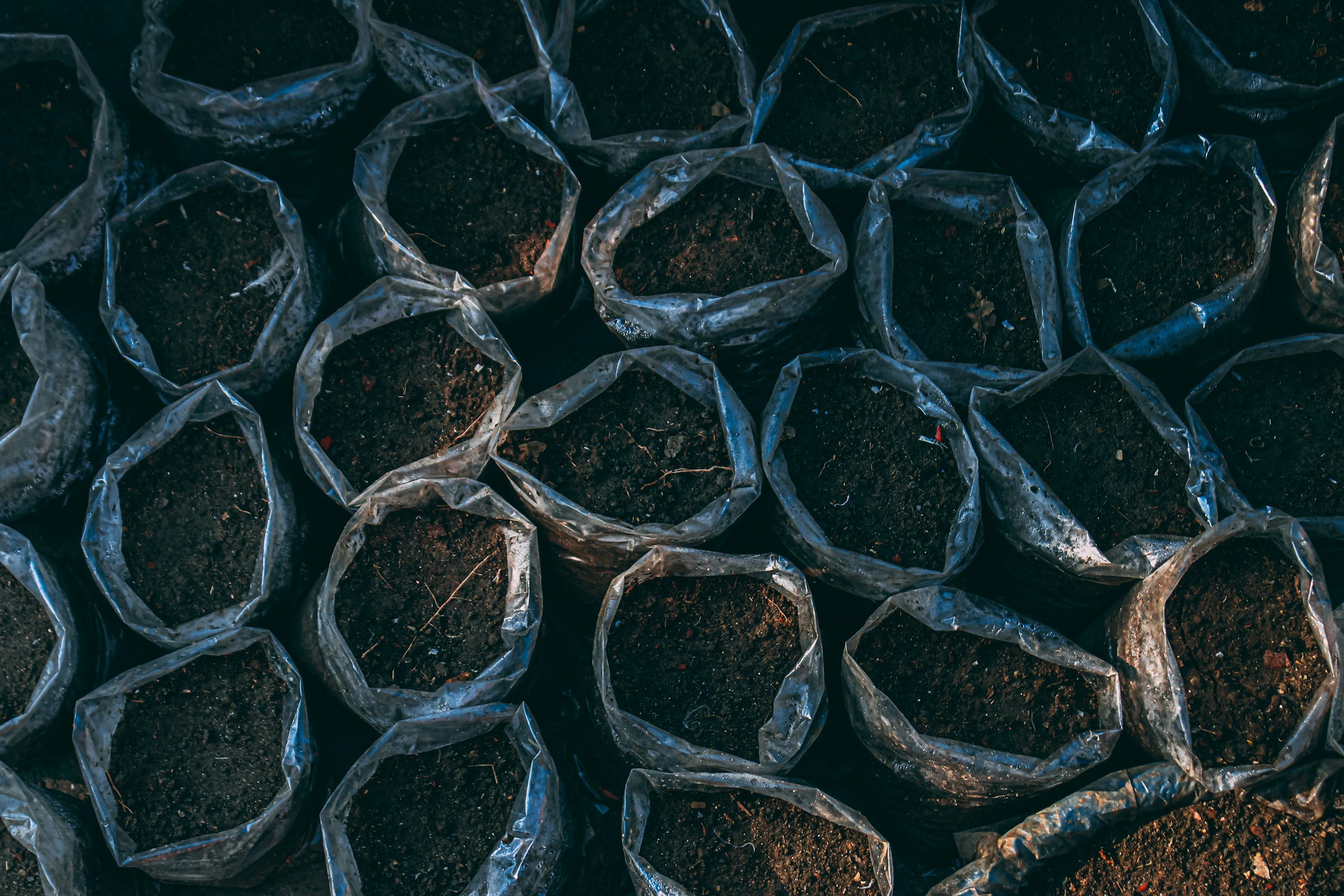
Agriculture (subject to field validation)
-
![]()
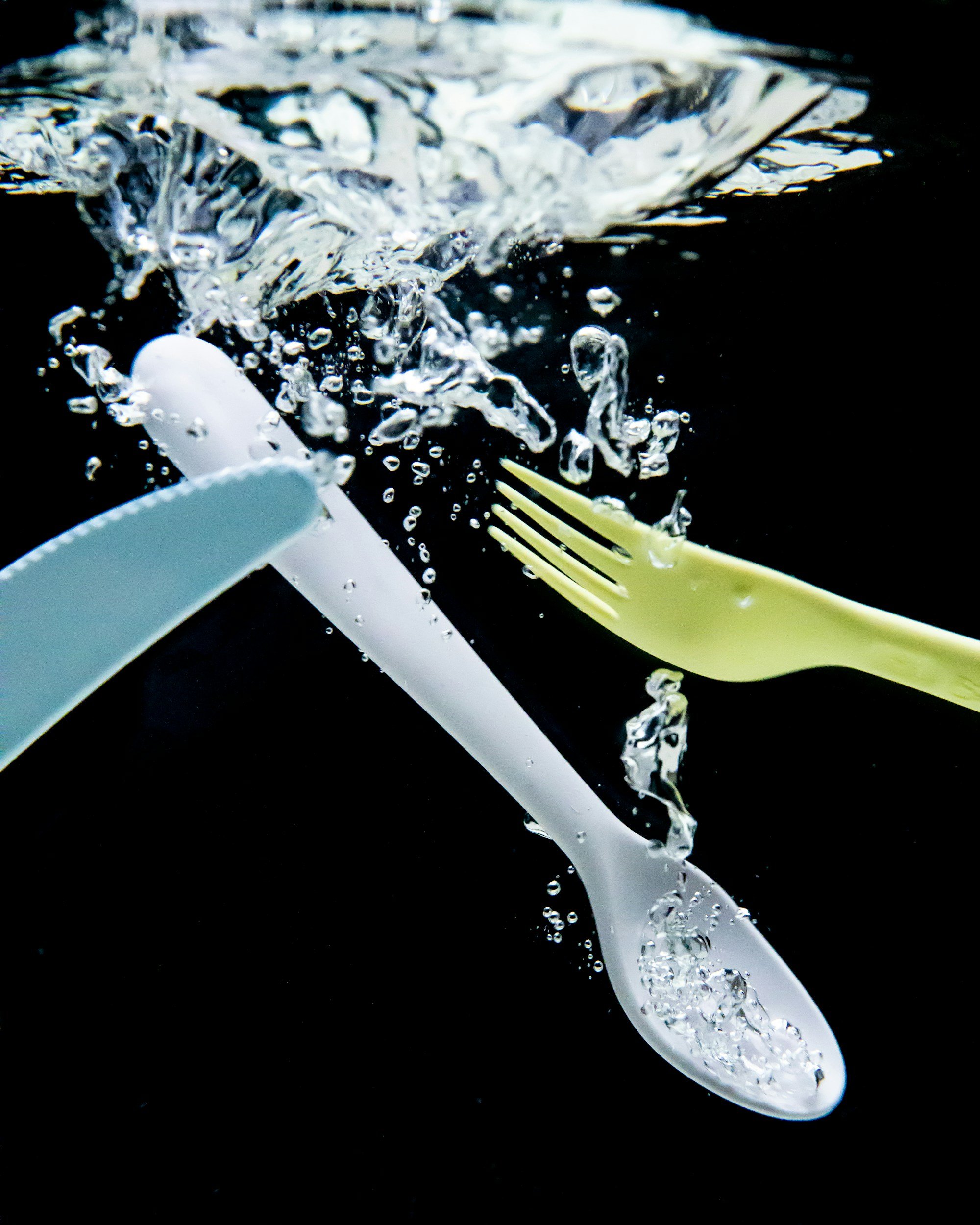
Foodservice and consumer goods
-
![]()
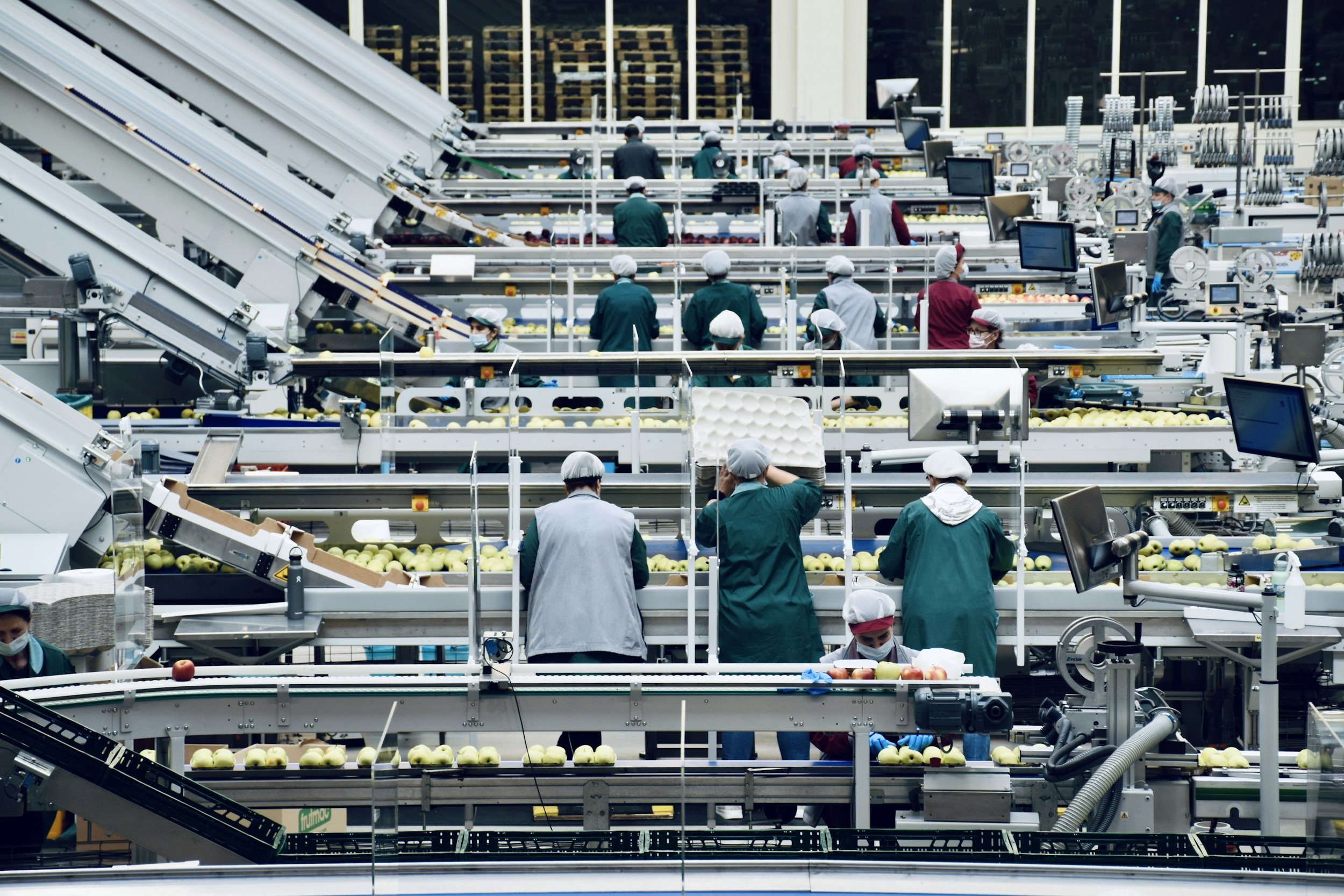
Industrial short-life uses
-
![]()
Precision casting
-
![]()
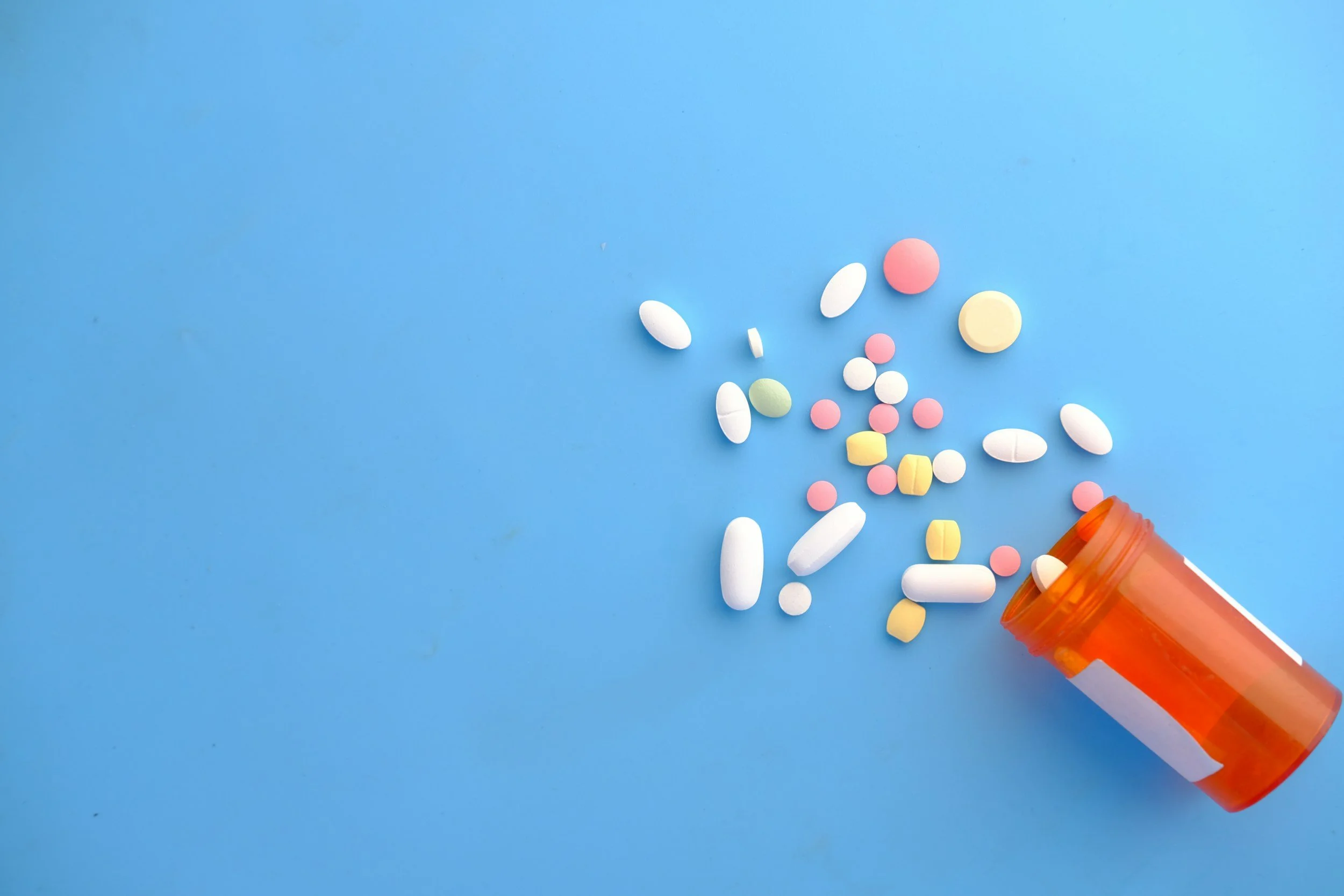
Medical and healthcare non-patient-contact concepts (subject to regulatory qualification)
-
![]()
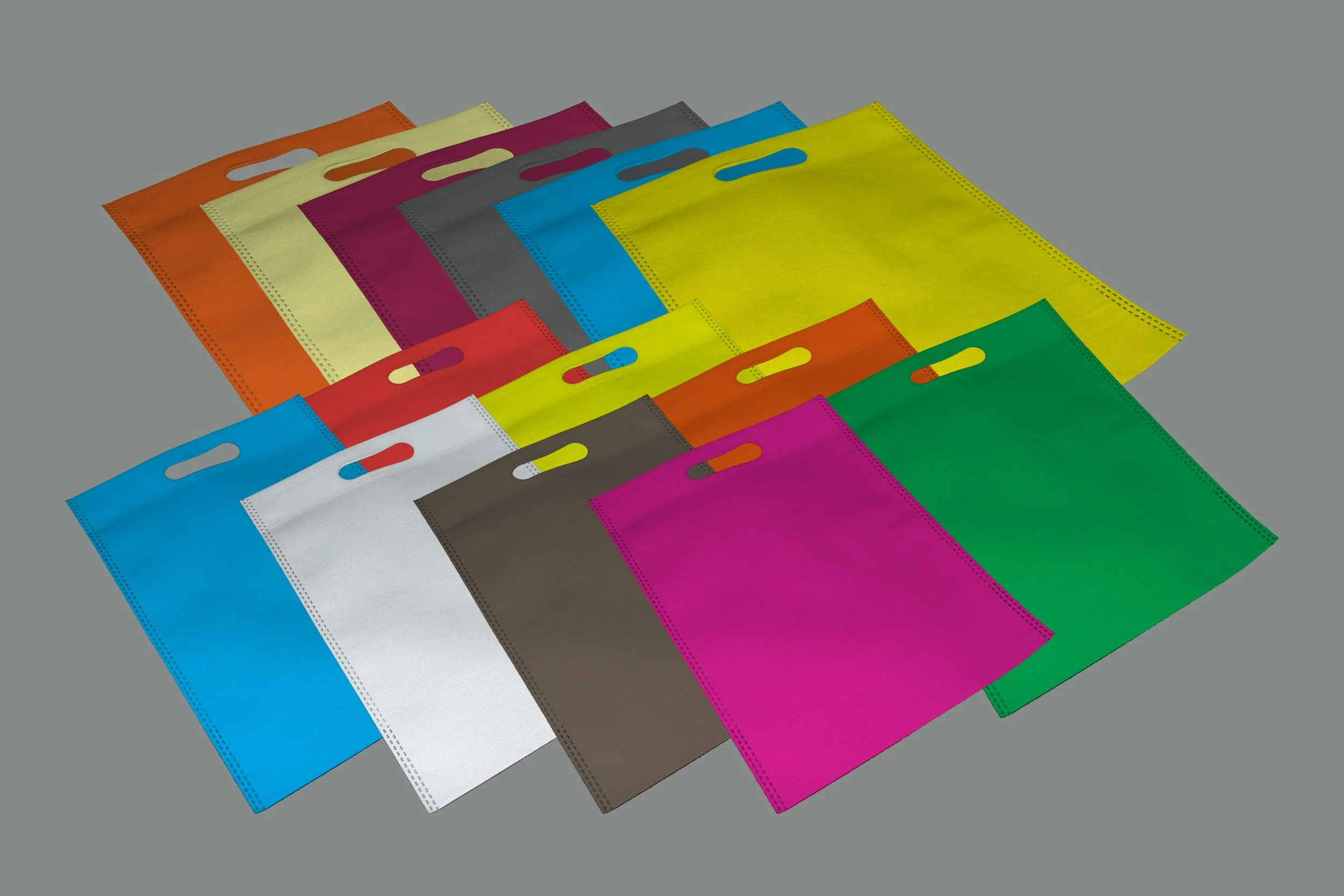
Textiles and nonwovens
-
![]()
Construction consumables
-
![]()
Office supplies



ROADMAP
Then, now, next…
Eight years to a patent
Fifteen years of academic and industrial research had failed to make corn starch bind without turning it into a bioplastic. We found a way, and patented it.
Process fit, grades and blends
Adapting the material across extrusion, injection molding, 3D printing and more; optimizing for different production lines; developing blends with other natural materials.
Fermentation as a platform
Corn Next is exploring corn-stalk and other agricultural-residue feedstocks for future fiber-based and packaging materials. These programs remain in R&D and require validation of processability, mechanical performance, safety and end-of-life behavior before commercial claims are made.
NDA REQUIRED
Technical data room
Full specifications, process parameters, test data and certification documentation are available under NDA.