Eight Years of Learning: From Corn Starch to Corn Next
People usually share the finished product, the polished version, or the success story. Today, we want to share something different.
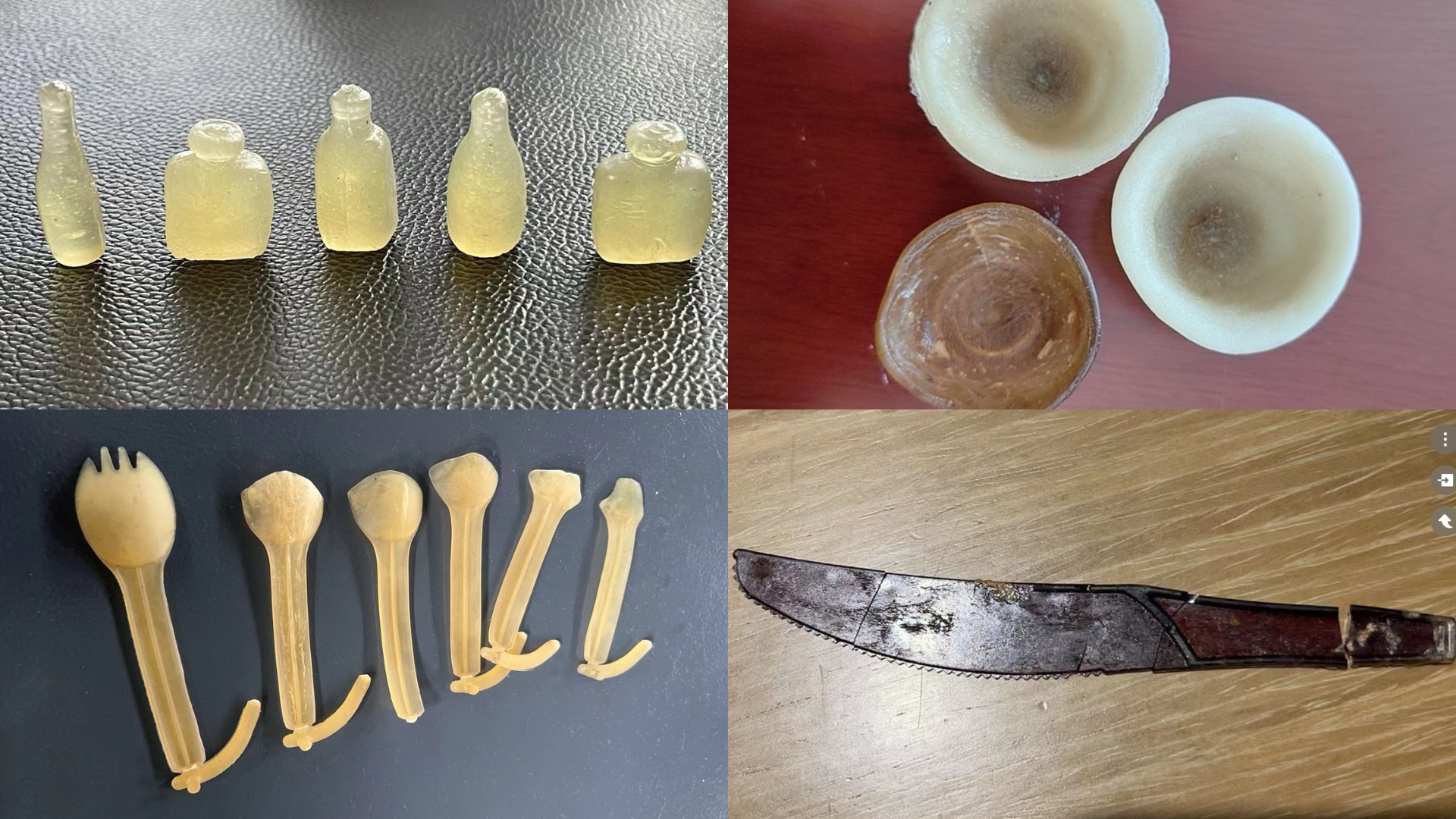
What you see in these photos are not perfect products. They are rough, broken, incomplete, and not yet usable. But they represent the most important milestones of the past eight years.
Our journey began in 2018 with the first solid tube made from pure corn starch. For the first time, we were able to turn corn starch into a solid, self-supporting form. It was fragile and unstable, far from practical use, but it proved something critical. Corn starch, without chemical modification, could become a structural material. That single breakthrough told us this journey was worth continuing.
From there, the work became slower and more complex. We moved from tubes to strips, learning how the material truly behaves under different conditions. These early samples may look insignificant, but each one represents countless failed attempts. We struggled with flow control, moisture balance, temperature limits, and repeated structural collapse. At times, the material would simply disappear inside the equipment. Progress only came when we stopped trying to force outcomes and began learning how to work with the material on its own terms.
Our first attempt at injection molding marked another important turning point. The result was a broken, incomplete knife, unusable by any standard. Yet it proved something bigger. The material could enter real industrial manufacturing systems. Not perfectly, and not without failure, but realistically. This moment shifted our work from pure experimentation toward real-world feasibility.
When the first cup was successfully formed, something changed again. We were no longer focused only on material behavior. We were beginning to think in terms of function. A container with a clear purpose made the work tangible, not just for us, but for anyone who could see it. It marked the transition from material research to practical application.
We also explored 3D printing, not as a production method, but as a way to further understand the material itself. The goal was never efficiency. It was learning. We needed to know whether the material could hold its form across different manufacturing processes. The answer was yes, but only through continued iteration and adjustment.
The first spoon followed. It was incomplete and far from refined, but it represented a crucial moment. For the first time, Corn Next began to resemble tableware rather than a laboratory sample. At that point, it became clear that this work had moved beyond research alone.
Eight years into this journey, we can say there were no shortcuts. We encountered faster and easier paths many times, but chose not to take them. We believe deeply that natural materials should not be forced to imitate plastic. They deserve to be treated as an entirely new material category, with their own properties, limitations, and possibilities.
True innovation is rarely the result of a single breakthrough. It is built through the accumulation of many imperfect steps, repeated failures, and hard-earned lessons.
Today, Corn Next has moved far beyond these early stages, but we keep every one of these samples. They remind us why we started, what we refused to compromise, and what we chose to protect. Every small step matters. Every failure leaves a trace forward.
This is how real materials are born.